7 Points when Choosing a Multihead Weigher
1. Accuracy Requirements
- Determine the accuracy needs based on product characteristics. For example, premium snacks or health products require high precision, typically ±0.1g to ±0.5g, while general food items or chemical materials may allow a wider range of ±1g to ±2g.
- Pay attention to the repeatability and stability of the combination scale. These can be assessed by reviewing technical specifications or conducting practical tests.
2. Weighing Speed
- Select a combination scale with an appropriate speed based on your production line capacity. Low-speed models (40–60 bags/min) are suitable for small-scale production or applications with moderate speed requirements; high-speed models (80–120 bags/min or higher) are ideal for large-scale production lines.
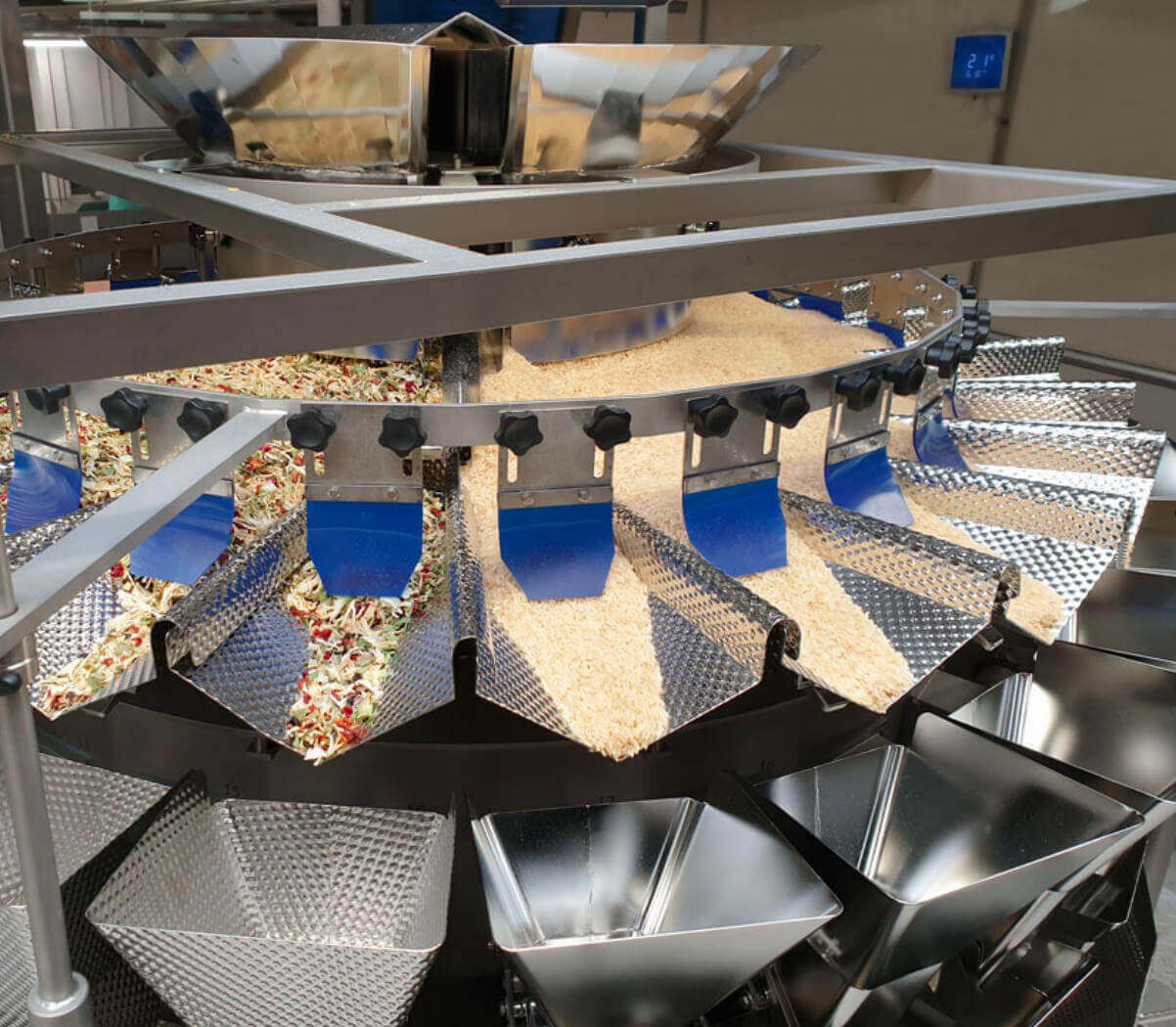
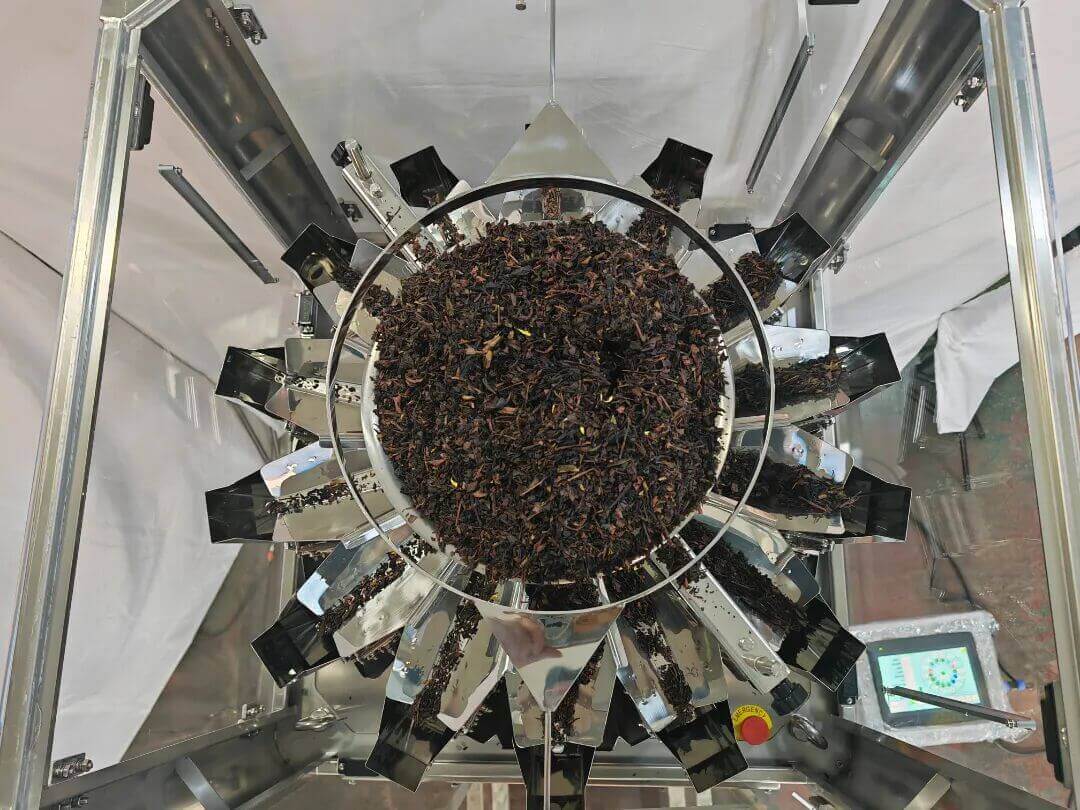
- Note the relationship between the number of hoppers and speed. Generally, more hoppers allow for more combination possibilities and faster speeds, but the equipment cost also increases.
3. Material Characteristics
- Fragile materials (e.g., potato chips, cookies): Choose a combination scale with soft-landing technology and adjustable vibration amplitude to prevent damage during conveying.
- Sticky materials (e.g., candy, minced meat): Opt for equipment with anti-stick hoppers, special coatings, or vibration mechanisms to prevent material adhesion, which can affect weighing accuracy.
- Powdery materials: Consider sealed designs and dust removal systems to prevent dust dispersion while ensuring hopper sealing and cleanliness.
4. Hopper Material and Design
- In the food industry, hoppers are typically made of 304 or 316 stainless steel, with surface roughness meeting hygiene standards (e.g., Ra ≤ 0.8μm) to facilitate cleaning and prevent material adhesion.
- The hopper opening and closing mechanism should be flexible, reliable, and free of dead angles to avoid material accumulation.
5. Control System
- Modern combination scales should feature intelligent functions such as automatic zero-point tracking, temperature drift compensation, and adaptive parameter adjustments to ensure stable and accurate weighing.
- The user interface should be intuitive, allowing operators to easily set parameters, monitor operational status, and perform fault diagnosis.
6. Brand and After-Sales Service
- Choose well-known brands and reputable suppliers to ensure product quality, technical expertise, and reliable after-sales support.
- Evaluate the supplier’s local service capabilities, including maintenance response times and spare parts availability, to ensure timely resolution of any equipment issues.
7. Cost and Cost-Effectiveness
- Consider the overall cost of the equipment, including purchase price, operating costs (e.g., energy consumption, wear parts replacement frequency), and maintenance costs, to select a product with high cost-effectiveness.
- Avoid unnecessary costs by not over-pursuing excessive accuracy or speed; instead, choose equipment that aligns with your actual production needs.
about
Multiweigher factory
We're fully committed to production of multihead automatic weighing and packaging machine.